Official Information – Australia

Derila ERGO Memory Foam Pillow Australia

An ergonomic, butterfly-shaped memory foam pillow engineered to cradle your head, support your neck and keep your spine aligned — whether you sleep on your side, your back or your stomach.

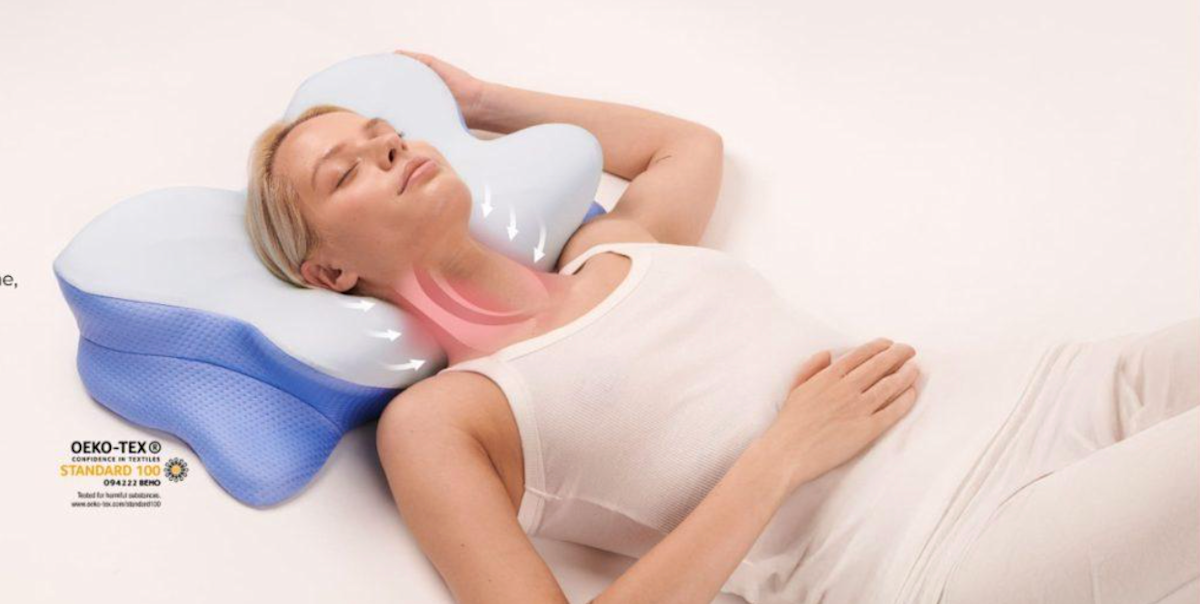
Woman sleeping on the Derila ERGO memory foam pillow with neck support

Why Australians Are Rethinking Their Pillow

Sleep is not a luxury. It is the single most powerful recovery tool your body has, and yet millions of Australians wake up each morning feeling stiffer than when they went to bed. A sore neck, a dull ache between the shoulder blades, a jaw that feels clenched, a lower back that protests the moment you stand up — these are not random misfortunes. Very often they trace back to one overlooked object that your head rests on for roughly a third of your life: the pillow.

Traditional pillows are made to look plump on a retail shelf, not to support human anatomy. They are stuffed with polyester fibre or feathers that flatten within weeks, collapse under the weight of your skull and leave your cervical spine bent at an unnatural angle for hours at a time. Your muscles then spend the entire night quietly working to hold your head in position instead of switching off and recovering. That is why you can sleep eight hours and still wake up tired.

The Derila ERGO Memory Foam Pillow was designed to solve exactly that problem. Rather than being a soft bag of filling, it is a shaped ergonomic support surface. Its contoured butterfly profile, its raised cervical ridge and its side-sleeper wings are all deliberate design decisions intended to keep the head, neck and shoulders in one gentle neutral line. In Australia, where long commutes, desk work and screen-heavy days already load the neck with tension, that kind of overnight correction can make a noticeable difference within the first week of use.

What Exactly Is the Derila ERGO Pillow?

The Derila ERGO is an orthopaedic-style memory foam pillow built from a high-density viscoelastic foam core. Memory foam is temperature and pressure responsive, which means it softens slightly where your body heat and weight are concentrated and stays firmer everywhere else. The practical result is that the pillow moulds around the shape of your skull and the curve of your neck instead of forcing you to adapt to a fixed lump.

The ERGO version refines the original Derila design with a more pronounced ergonomic geometry. There is a central recess that cradles the back of the head for back sleepers, a raised lower lip that supports the cervical curve, elevated side wings that fill the wider gap between ear and mattress for side sleepers, and shoulder cut-outs that let the shoulder slide underneath the pillow rather than being pushed upward. Layered on top of the foam core is a breathable, cooling-touch cover that helps move heat and moisture away from the skin — an obvious advantage during a humid Australian summer.

The materials used in the pillow carry OEKO-TEX Standard 100 certification, an independent textile testing standard that verifies the fabric has been checked for harmful substances. For anyone with sensitive skin, allergies or small children in the house, that certification is a meaningful reassurance rather than marketing decoration.

How the Ergonomic Shape Works

Spinal alignment sounds like a clinical phrase, but the idea behind it is simple. When you stand upright with good posture, your neck holds a soft forward curve and your head sits balanced directly over your shoulders. The goal of a good pillow is to reproduce that exact relationship while you are lying down. Too high, and your chin is pushed toward your chest, compressing the airway and straining the muscles at the back of the neck. Too low, and your head tips backward, overextending the joints at the top of the spine.

The Derila ERGO addresses this with a variable-height profile. The contoured ridge fills the hollow beneath the neck, which is precisely the space a flat pillow leaves empty. The head then settles into the lower central cradle instead of rolling off to one side. For side sleepers, the taller wings compensate for shoulder width so the head is not tilted downward toward the mattress. That single adjustment is often what stops the recurring one-sided neck pain that many side sleepers assume is unavoidable.

There is also a pressure distribution benefit. Because memory foam conforms rather than resists, the weight of your head is spread across a much larger surface area. Fewer pressure points mean fewer micro-awakenings, less tossing and turning, and longer stretches of deep sleep. Many users report that the biggest change is not falling asleep faster but staying asleep longer without repeatedly repositioning.
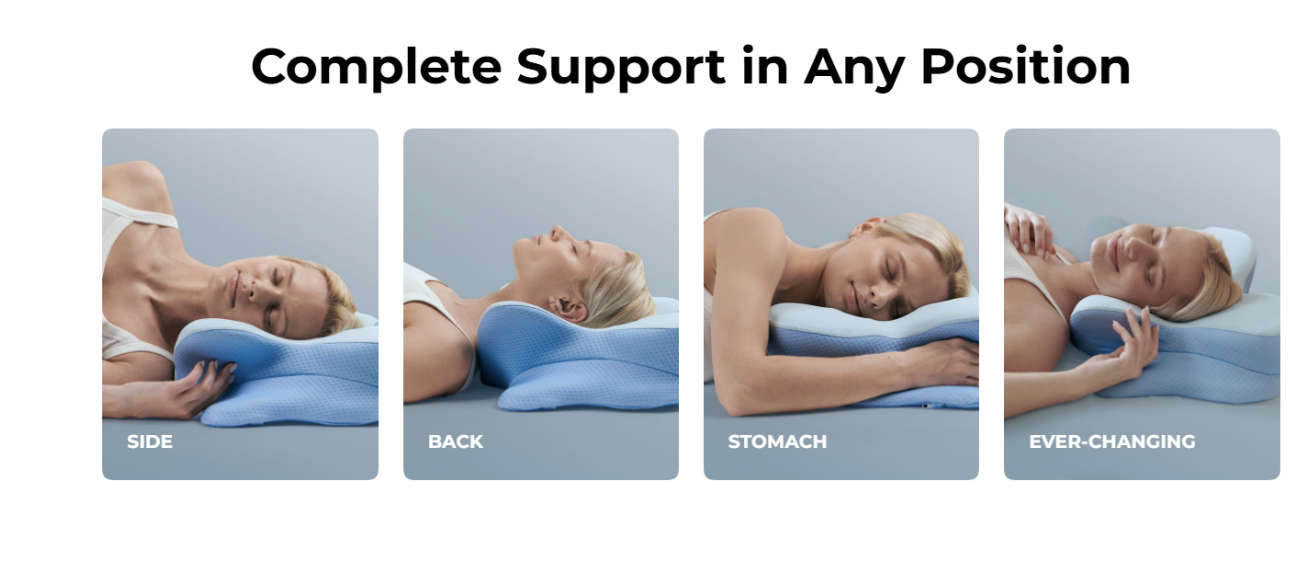
Complete Support in Any Position

Side, back, stomach or an ever-changing mix of all three — the contoured profile adapts to how you actually sleep, not how a pillow wishes you would.

Derila ERGO pillow supporting side, back, stomach and ever-changing sleep positions

Key Benefits at a Glance

Neck and shoulder relief

The cervical ridge supports the natural curve of the neck so the surrounding muscles can finally switch off and recover overnight.

Better spinal alignment

Head, neck and spine are held in one neutral line, reducing the strain that causes morning stiffness and tension headaches.

Cooling breathable cover

A soft knitted cover with a cooling touch finish moves heat and moisture away, which matters through warm Australian nights.

Fewer snoring triggers

By keeping the chin from collapsing toward the chest, the airway stays more open — a common cause of positional snoring.

Works for every sleeper

Wings for side sleepers, a central cradle for back sleepers and a lower flat zone for stomach sleepers.

Certified safe materials

OEKO-TEX Standard 100 tested fabric, hypoallergenic and free from harmful substances.

Who Should Consider It?

The Derila ERGO is not a medical device and it does not claim to cure any condition. What it does is remove one very common mechanical cause of poor sleep. It tends to suit office workers and drivers who spend long hours with the head pushed forward, side sleepers who keep waking on the same painful side, people who snore mainly when lying on their back, light sleepers who wake repeatedly through the night, and anyone still sleeping on a collapsed pillow that has quietly lost its shape over the years.

If you have a diagnosed spinal condition, a recent injury, or ongoing severe pain, speak to your physiotherapist, chiropractor or GP before changing your sleep setup. A pillow is a supportive tool, not a substitute for professional care.

Getting Used to It

Be prepared for a short adjustment period. If your neck has spent years being held in a bent position, correct alignment can initially feel unusual — the same way good posture feels strange after a lifetime of slouching. Most people settle within three to seven nights. A simple approach is to use the Derila ERGO for the first half of the night at first, then switch to full-night use once it starts to feel natural. Give the foam a few hours to fully expand after unboxing, and let any manufacturing scent air out in a well-ventilated room for a day before first use.

Position matters too. The lower contoured edge should sit closest to your shoulders so the ridge is directly under the neck, not under the back of the skull. Pull the pillow down until it makes contact with your shoulder line, leaving no gap. This one detail is the difference between the pillow working as designed and simply feeling like a firm block of foam.

Caring for Your Pillow

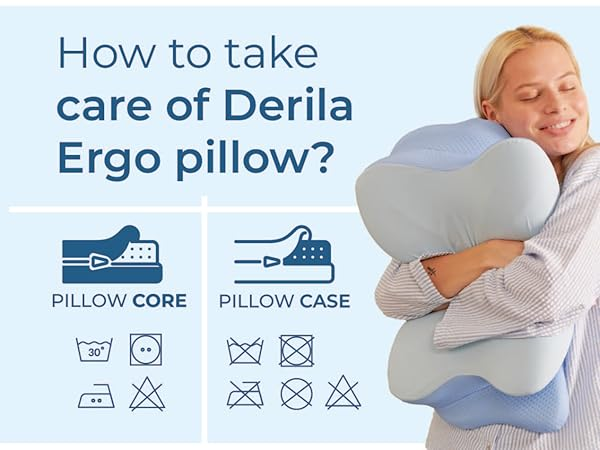
Care is straightforward, but the core and the cover are treated differently. The removable pillow case can be machine washed at 30°C, tumble dried on a low setting and ironed gently. The memory foam core must never be machine washed, soaked, bleached, tumble dried or dry cleaned. Water breaks down the cell structure of the foam and destroys its support. To freshen the core, spot clean with a barely damp cloth and mild soap, then let it air dry completely away from direct sunlight and radiators. Airing the pillow every few weeks and rotating it end to end will keep it feeling responsive for far longer.

Care instructions for the Derila ERGO pillow core and pillow case

Simple Care, Long Life

  • Pillow case: machine wash at 30°C, low tumble dry, cool iron.
  • Pillow core: no machine wash, no bleach, no tumble dry, no dry cleaning.
  • Spot clean the core and air dry fully out of direct sunlight.
  • Air the pillow regularly to keep the foam fresh and responsive.

Frequently Asked Questions

Is the Derila ERGO suitable for side sleepers?

Yes. The raised side wings are specifically shaped to fill the gap between the ear and the mattress created by shoulder width, keeping the head level rather than tilted down.

Will it help with snoring?

It can help with positional snoring. By preventing the chin from dropping toward the chest, the airway is less likely to be compressed. It is not a treatment for sleep apnoea.

Does it sleep hot?

The cover uses a breathable knit with a cooling-touch finish and the foam is ventilated, so it runs noticeably cooler than a solid block of standard memory foam.

How long does it take to get used to?

Most people adjust within three to seven nights. Start with partial-night use if correct alignment feels unfamiliar at first.

Can I wash it?

Wash the removable cover at 30°C. Never wash or soak the memory foam core — spot clean and air dry instead.

Where can I order it in Australia?

Order through the official page linked on this site to make sure you receive genuine stock and any current offer.

Ready to Wake Up Without Neck Pain?

Order the Derila ERGO Memory Foam Pillow in Australia through the official page below.

Order Derila ERGO Memory Foam Pillow now

https://nutra4health.com/Derila-ERGO-Memory-Foam-Pillow-Australia

Please Contact Me for Any Information

Questions about the product, pricing, delivery in Australia or partnership enquiries? Reach out on any channel below.